Acura = Alfa-Romeo = Alpina = Artega = Ascari = Aston-Martin = Audi = BMW = Bentley = Brabus = Bugatti = Buick = Cadillac = Caparo = Chevrolet = Chrysler = Citroen = Covini = Dacia = Daewoo = Daihatsu = Daimler = Devon = Dodge = Donkervoort = Farbio = Ferrari = Fiat = Fisker = Ford = GM = GMC = Gumpert = Holden = Honda = Hummer = Hyundai = Infiniti = Isuzu = Italdesign = Jaguar = Jeep = KTM = Kia = Koenigsegg = Lamborghini = Lancia = Land Rover = Leblanc = Lexus = Lincoln = Lobini = Lotus = MG = Mansory = Maserati = Maybach = Mazda = Mazel = McLaren = Mercedes-Benz = Mercury = Mindset = Mini = Mitsubishi = Morgan = Nismo = Nissan = Noble = ORCA = Oldsmobile = Opel = Peugeot = PGO = Pagani = Plymouth = Pontiac = Porsche = Renault = Rinspeed = Rolls-Royce = Rover = Saab = Saturn = Scion = Skoda = Smart = Spyker = SsangYong = Startech = Stola = Strosek = Suzuki = Torino = Subaru = Think = Toyota = Tramontana = Valmet = Vauxhall = Venturi = Volkswagen = Volvo = Wiesmann = Yes = Zagato = Zenvo.
Showing posts with label Aston Martin. Show all posts

Wednesday, January 15, 2014

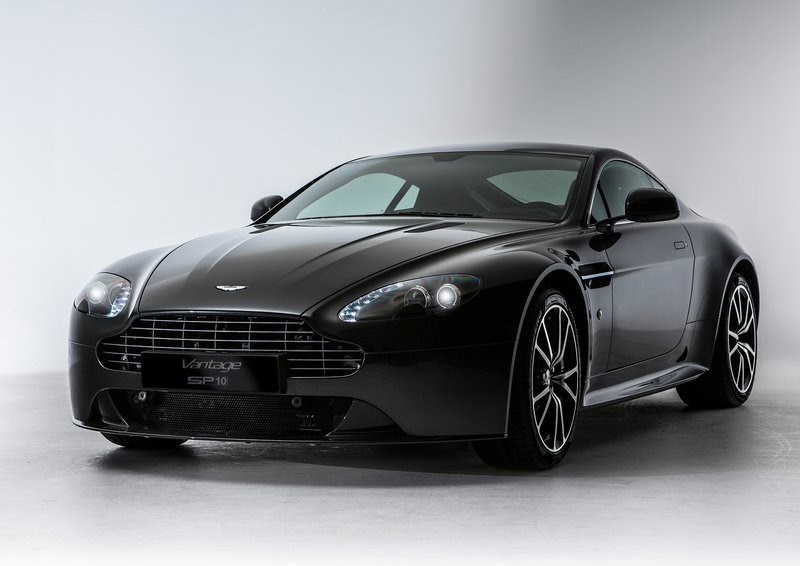
Aston Martin Vantage SP10, 2013

 
  •  Aston Martin Vantage SP10, 2013

The Aston Martin is launching a very special edition V8 Vantage S in Continental Europe that takes its inspiration from the brand's numerous successes on the race track.

Inspired by its successful motorsport activities in the GT4 racing series - particularly in the VLN endurance championship at the Nürburgring - the new car is a road model that has been engineered in the style of the luxury sports car maker's GT4 racers.

With 436 PS and a top speed of 305 km/h, Aston Martin has named the new special edition model Vantage SP10. The inspiration behind it is its namesake class SP10 in the VLN series, in which GT4 racing cars compete at the Nürburgring.

Impressive performance and, for the first time, manual six-speed transmission
Technically, the Vantage SP10 is almost identical to the V8 Vantage S but with the addition, for the first time, of a six-speed manual transmission.

Since its market launch in 2011, the V8 Vantage S has developed into a popular model for Aston Martin customers, a model that places an even greater emphasis on sportiness. With its 4.7-litre V8 engine, which produces 436 PS and 490 Nm on the road, the V8 Vantage S manages 0-100 km/h in 4.5 seconds and reaches a top speed of 305 km/h. This sportiness is enhanced by its striking appearance, which took inspiration from the V12 Vantage, and the sensational sound from the engine, which comes thanks to the sports exhaust with active bypass valves which was specifically developed for this model.

The Aston Martin Vantage SP10 is the first V8 Vantage S to feature a six-speed manual transmission. This manual gearbox is offered as standard and, as with the V8 Vantage, will impress those who enjoy pure sports car driving.

Customers can choose the optional Sportshift™ II automated manual seven-speed transmission that was developed for the introduction of the V8 Vantage S. This transmission allows for gear changes that are around 20% quicker than the previous transmission, which worked with six gears. This additional gear brings about shorter transmission ratios and optimum gear shifting. And the result: faster acceleration and a more sporty driving experience.

With the V8 Vantage S, Aston Martin has further closed the gap between road cars and racing cars. Like its role model, the Vantage GT4 racing car, it has an extremely rigid aluminium chassis - the ideal platform for a racing car but also the perfect basis for a sporty road car.

Impressive performance, dynamic driving characteristics and superb handling transform the V8 Vantage S, and thus the Vantage SP10, into a sports car that delivers a true 'fun factor' for enthusiast drivers of all kinds.

Design inspired by motorsport
The Aston Martin Vantage SP10 has a purposeful appearance that showcases its agility and performance and transfers the visual dynamics from motorsport to the road.

Both the Coupé and the Roadster are available in Ceramic Grey Metallic. The convertible top of the Roadster is Titan Grey. Its 19-inch cast alloy rims with V-shaped spokes in a diamond turn finish and painted in high-gloss black, and the black brake callipers, emphasise the muscular look of the car. The special paint on the rims is offered exclusively for the special Vantage SP10 model.

Other visual and functional details from the world of motorsport include the front splitter and the carbon rear diffuser - both come as part of the Vantage SP10 standard equipment, along with the clear rear lamps.

Black is the dominant colour in the vehicle interior. Entirely in line with its motorsport pedigree, the Coupé features characteristic Vantage S seat and backrest covers and a sports steering wheel in Black Alcantara.

The silver stitching offers a strong contrast. And the interior is rounded off by a roof liner in Black Alcantara. In contrast to the Coupé, the Roadster features black leather seat and backrest covers and a black leather steering wheel, also with silver stitching.

Both versions are equipped with a centre console in Piano Black. The instrument panel is trimmed entirely with leather and embellished with silver stitching.

Extensive combinations of features for more luxury and practicality
Like the V8 Vantage S, the Vantage SP10 is more than just a distinctive sports model. Thanks to its features, it will prove itself to be outstanding in everyday use.

Electrically operated seats, satellite navigation, cruise control and Bluetooth telephone preparation are just a few examples of the luxurious list of standard equipment that makes the Vantage SP10 a pleasant companion for everyday life. And with the 750W Premium Audio Sound System which is even part of the standard equipment in the Vantage SP10, music lovers can also make the most of this car.

The high-fidelity sound can be enhanced further by choosing the 1000W Bang & Olufsen BeoSound Audio System as an optional extra. This and other additional equipment features, such as a reversing camera, sports suspension (on the Coupé only) or lightweight carbon seats, guarantee even higher levels of comfort and luxury.

One particularly distinctive feature of this special model is a badge on the engine block that features the inscription "Aston Martin Vantage SP10" and which, of course, comes as standard.

Friday, January 3, 2014

Aston Martin Vanquish Centenary Edition, 2013


  • Aston Martin Vanquish Centenary Edition, 2013

The iconic British sports car brand Aston Martin is marking the start of its 100th birthday celebrations - 15 January - with the unveiling of a bespoke new Aston Martin Vanquish Centenary Edition.

The luxury brand's ultimate GT car showcases a painstakingly created Centenary Edition specification that will be available worldwide on just 100 examples of each of the car maker's model lines: V8 Vantage, DB9, Rapide and Vanquish.

Featuring a unique graduated paint finish, solid sterling silver Aston Martin wing badges with tailored 'trans flux' enamel inlay and a special Aston Martin hallmark, the exterior represents an exclusive new celebration of the company's 100-year history.

A Centenary Edition Aston Martin is identified inside by its exclusive and luxurious treatment. Deep Soft black leather - previously featuring only in the One-77 hypercar - with contrasting silver stitching, a special silver thread embroidery of the Aston Martin wings in the head restraints and solid sterling silver sill plaques individually numbered with an Aston Martin hallmark are among the features unique to the car.

Each Centenary Edition model will also be supplied with a unique presentation box containing a number of exclusive gifts to mark the first 100 years of the company. These include two glass keys, two bespoke key pouches made from leather matching the car's interior trim, solid silver cufflinks featuring the Aston Martin script, solid silver Rollerball pen and high quality Bang & Olufsen headphones.

The gift box will also include a silver polishing cloth to help owners ensure the silver centenary wings badges and sill plaques on their car keep their lustre.

Some specification details will vary market by market around the world but all cars will, as ever, be painstakingly handcrafted at Aston Martin's global headquarters and state-of-the-art manufacturing facility at Gaydon, in Warwickshire.

The process of creating the unique Centenary Edition paint finish, for instance, clearly demonstrates the brand's commitment to bespoke luxury. Adding an average of 18 hours to a paint process that can already take more than 50 hours to complete, the unique graduated finish is meticulously built by adding special 'tinters' to create the darker inner colour. This custom-made mixture is then applied to each panel by hand, using a special mini-jet spray gun.

Tuesday, June 11, 2013

Aston Martin V12 Zagato, 2013


  • Aston Martin V12 Zagato, 2013

With the final design signed-off and engineering development work progressing apace, Aston Martin reveals the first images of the new Aston Martin V12 Zagato (road car) scheduled for production later in 2012.

The Aston Martin V12 Zagato is the pinnacle of the Vantage range. It is also the latest expression of a successful creative collaboration that has given rise to a series of striking GT cars over the last half-century, the original and most iconic of which being the DB4GT Zagato. Not only does this masterpiece rank amongst the most desirable, collectable and valuable cars in history, its 50th anniversary provided the inspiration for the V12 Zagato.

Though commemorating a great Aston Martin of the past the Aston Martin V12 Zagato could be no mere pastiche of the original. Instead the project was seen as the perfect opportunity to take Aston Martin's ethos of technology and tradition to a new and exciting level. To this end the V12 Zagato combines the modern ideas, materials, processes and technology pioneered on One-77, while remaining true to the purity and craftsmanship of its illustrious forebear.

For Aston Martin's CEO, Dr Ulrich Bez, the V12 Zagato is "a celebration of both Aston Martin's heritage and its future". He continues: "Our relationship with Zagato stretches back more than 50 years. Together in that time we have created a series of very special cars. The first - the DB4GT Zagato - is a true icon: fast, beautiful and incredibly desirable. In the V12 Zagato I believe we have captured the spirit of that car and combined it with a confident twist of modernity to give it a character all of its own."

Initial design concepts for the Aston Martin V12 Zagato were explored in early 2010. Inspired by Zagato's bold and individual styling signatures Aston Martin's Director of Design, Marek Reichman, and his Gaydon-based design team relished the challenge of shaping the V12 Zagato, creating a car that pushes the boundaries of Aston Martin's design language, yet pays tribute to the DB4GT Zagato. Demonstrating Aston Martin's ability to rapidly bring ideas to fruition the Zagato programme quickly gained momentum, the design team working hand-in-hand with engineers and artisans to complete the build of a pair of concept cars in the spring of 2011.

May 2011 saw the Aston Martin V12 Zagato make its world debut at the prestigious Villa d'Este concours. Entered in the Concept Cars and Prototypes class, the V12 Zagato wowed the judges and the crowd, taking first place against impressive opposition. In June the Villa d'Este winner - along with the second prototype car - made the Aston Martin V12 Zagato's world racing debut at the gruelling 24 hour endurance race held at the Nürburgring. Both cars completed the ultimate durability test, continuing Aston Martin's 100 per cent finishing record in this notoriously tough race.

After an overwhelmingly positive response from customers, the decision was made in July 2011 to build a strictly limited run of V12 Zagatos. Since then, Aston Martin's design team have worked to refine the sports car's detailing and aerodynamic performance while staying faithful to the original design concept. At the same time engineers based at Gaydon have been putting prototypes through the company's rigorous development programme to ensure the V12 Zagato performs as well as it looks.

Every Aston Martin is a unique combination of advanced materials, technology and time-honoured craftsmanship. The Aston Martin V12 Zagato takes this philosophy to a level previously seen in the company's exquisite One-77 supercar, which completes its build run this year. Built at Aston Martin's global headquarters in Gaydon, Warwickshire, production of the V12 Zagato will be strictly limited to no more than 150 cars.

Creating each V12 Zagato is a painstaking process that takes approximately 2,000 man-hours to complete. Just like the One-77, the V12 Zagato is constructed from a combination of hand crafted aluminium and carbon fibre. The bonnet, signature 'double-bubble' roof and doors are hand-crafted aluminium, while the front and rear fenders, door sills and boot lid surround are made from carbon fibre.

The finished body is then painted in the same dedicated area as the One-77. Four unique colours have been created for the Aston Martin V12 Zagato: Scintilla Silver, Alloro Green, Alba Blue and Diavolo Red. The painting process alone takes some 100 hours to complete and is followed by the marriage of the body and the drivetrain within the sports car production area. From there the V12 Zagato is transferred to the standalone facility originally built to house One-77 production, where the build is completed.

This serene, laboratory-like space is perfectly suited to the task of creating special cars such as the V12 Zagato. It is here that time is lavished upon the fitment and installation of an array of bespoke components, including the side glass and the distinctive rear window, which features a curved surface that continues the sculptural lines of the 'double-bubble' roof. All the exterior brightwork around the windows has a contemporary black finish to compliment the exposed carbon fibre components. Fitment of the hand-crafted interior and upholstery is also completed in this dedicated build area.

Like all Aston Martins when viewed as a whole the Aston Martin V12 Zagato is an artful composition of powerful lines and compelling proportions, but when viewed up close it reveals sophisticated, sculptural surfaces and jewel-like details. The exposed elements of carbon fibre on the front splitter, A-pillars, rear lamp pods, diffuser, door mirror cases and rear wing all display the same perfectly symmetrical weave and smooth resin finish. Likewise the bold new grille is formed in a unique three-dimensional composite material mesh that echoes Zagato's famous 'Z' moniker.

More delights are found inside. Seven Bridge of Weir hides - in semi-aniline finish to offer durability while preserving the natural texture of the leather - are used to trim the V12 Zagato's interior. Hand-stitched quilting of a unique design creates a flowing pattern that evokes a dynamic sense of movement across the seats and headlining, while 'Z' embroidery in the headrests and rear parcel shelf add a further flourish. Satin-finish carbon fibre on the dashboard and centre stack is perfectly complimented by piano black accents and satin black rotary switchgear. Carbon fibre sill plaques with 'V12 Zagato' inlaid metal script provide a distinctive finishing touch.

A work of art built by skilled craftsmen to be driven and enjoyed by the world's most discerning car collectors, the Aston Martin V12 Zagato is a fitting tribute to its illustrious ancestor. On-sale now priced at £330,000 (plus local taxes) the production specification V12 Zagato will be showcased at the Geneva Salon International in March 2012. First deliveries are scheduled for Autumn 2012.

Monday, April 22, 2013

Aston Martin V12 Vantage Roadster, 2013


  •  Aston Martin V12 Vantage Roadster, 2013

Aston Martin is lifting the lid on an extreme new sports car with the global debut of the Aston Martin V12 Vantage Roadster.

The new sports car, available as a limited edition in selected markets worldwide, immediately becomes the most potent example of the open-top Vantage range and mixes the breath-taking power of Aston Martin's naturally aspirated 6.0-litre V12 engine with the established thrills of Vantage Roadster driving for what is an unforgettable sports car experience.

The Aston Martin V12 Vantage Roadster's 6.0-litre engine, mated as in the Coupe to a six-speed manual gearbox, generates 517 PS at 6,500 rpm and a muscular 570 Nm of torque at 5,750 rpm. It has been intelligently packaged into the Vantage Roadster's compact form to fully exploit the sports-orientated model's ample natural agility.

The naturally-aspirated V12 provides high levels of power and torque yet it delivers a flexible, refined driving experience illuminated with the potential for truly electrifying performance. The 0-62 mph sprint is dispatched in just 4.5 seconds while this most potent Aston Martin Roadster is capable of 190 mph.

While the Roadster naturally shares much of the technical and specification features of the V12 Vantage Coupe, some elements are redesigned to take account of the Roadster's neat packaging and engaging dynamics.

The Aston Martin V12 Vantage Roadster features a redesigned rear boot lid and lower front air intake to maintain a level of dynamic performance that's fully in keeping with the V12 Coupe, while there are also a number of unique chassis revisions. These include a modified rear damper set-up, front and rear damper valve tuning and a new rear spring design.

These changes, in conjunction with Aston Martin's use of Pirelli P Zero Corsa tyres, ensure the sports car delivers dramatic straight-line performance as well as outstanding handling.

Styled to be as beautiful as it is potent, the new Roadster boasts a number of eye-catching additions that underline its sporty characteristics. Carbon fibre side strakes; a carbon fibre front splitter and rear diffuser; carbon fibre mirror caps and carbon fibre rear lamp infills - plus the new forged alloy wheel design - should leave the sports car cognoscenti in no doubt that this is a truly exclusive Aston Martin.

At the rear, the boot lid on the Aston Martin V12 Vantage Roadster incorporates a more pronounced 'flip' to reduce rear lift and improve stability at high speeds. The V12's diffuser houses a large, centre-mounted oil cooler and two large tail-pipe finishers.

As with the front splitter, the carbon fibre rear diffuser is hand-made to ensure the direction and consistency of the weave and ensure the best possible finish.

Inside, there are other distinguishing features that make the new car stand out from its illustrious siblings in the sought-after Aston Martin V8 Vantage and V12 Vantage line-up. Subtle additions such as the use of glass switches in the lower centre stack elevate yet further the luxurious ambience in the Aston Martin V12 Vantage Roadster cabin.

While for those seeking the ultimate in Aston Martin V12 Vantage Roadster personalisation, a package of interior trim comprising carbon fibre facia and carbon fibre gearshift surround is available.

Unique to the V12 Vantage and new V12 Vantage Roadster is the engine's "Sport" mode button, which enables the driver to select between two different powertrain modes.

Normal mode is the default from start-up and provides not only a more relaxed throttle response but also a quieter, more refined exhaust note. This creates a more progressive throttle response, suited to 'everyday' situations such as when driving in heavy traffic.

Sport mode, meanwhile, is designed for use in more dynamic driving situations where sharper responses are required. It has a number of tangible effects on the powertrain including a sharper throttle response, with the engine delivering more torque during the early stages of throttle pedal travel. Exhaust system bypass valves are also kept open for longer to create a particularly sporty exhaust note.

Aston Martin Chief Executive Officer Dr Ulrich Bez said: "The V12 Vantage models are, first and foremost, driver's cars - inviting and fully rewarding the driver's full involvement.

"The addition to our range of this exceptional new Roadster allows the driver and passenger to experience full 'sensory overload' thanks to its outstanding performance."

He added: "I believe no other car in this class offers the combination of the V12 Vantage Roadster's prestige, six-speed manual gearbox and the unique enjoyment that driving a high performance convertible can deliver."

Available to order in selected markets, the new Aston Martin V12 Vantage Roadster is priced at £150,000 RRP in the UK.

Technical Specifications
    Body
        Two-door, two-seat layout
        VH bonded aluminium structure
        Aluminium, magnesium alloy, composite and steel body
        Extruded aluminium door side impact beams
        High Intensity Discharge headlamps (dipped beam)
        Halogen projector headlamps (main beam)
        LED rear lamps

    Engine
        All-alloy quad overhead cam 48 valve 5,935cc V12
        Compression ratio 10.7:1
        Front mid-mounted engine, rear-wheel drive
        Fully-catalysed stainless steel exhaust system with active bypass valves
        Power: 517 PS at 6,500 rpm
        Torque: 570 Nm at 5,750 rpm
        0-62 mph (100 km/h): 4.5 seconds
        Top speed: 190 mph (305 km/h)

    Transmission
        Rear mid-mounted six-speed manual gearbox
        Alloy torque tube with carbon fibre prop shaft
        Limited-slip differential
        Final drive ratio 3.71:1

    Steering
        Rack and pinion
        Column tilt and reach adjustment

    Dimensions
        Length: 4,382mm
        Width: 2,022mm (including mirrors)
        Height: 1,256mm
        Wheelbase: 2,600mm
        Fuel Tank: 80 l
        Weight: 1,760kg

    Suspension
  • Front: Independent double wishbone incorporating anti-dive geometry, coil springs, anti-roll bar and monotube dampers
  • Rear: Independent double wishbones with anti-squat and anti-lift geometry, dual-rate coil springs, anti-roll bar and monotube dampers

    Wheels and tyres
        Front: 9J x 19" Pirelli P Zero Corsa 255/35 ZR19
        Rear: 11J x 19" Pirelli P Zero Corsa 295/30 ZR19
        Tyre repair kit

    Brakes
        Front: Ventilated carbon ceramic discs - 398 mm diameter with six-piston calipers
        Rear: Ventilated carbon ceramic discs - 360 mm diameter with four-piston calipers
        Dynamic Stability Control (DSC) with Track mode
        Anti-lock braking system (ABS)
        Electronic Brakeforce Distribution (EBD)
        Emergency Brake Assist (EBA)
        Traction Control

    Standard equipment
        Glass switches
        Carbon fibre door pulls
        Leather trimmed steering wheel
        Memory seats and exterior mirrors (three positions)
        Sports seats with 10-way electric adjustment, including height, tilt and lumbar adjustment
        Dual Stage Driver and Passenger Front Airbags
        Side Airbags (Sports seats only)
        Heated rear screen
        Automatic temperature control
        Trip computer
        Cruise control
        Hard Disk Drive (HDD) satellite navigation system
        Bluetooth telephone preparation
        Powerfold exterior mirrors
        Rain-sensing wipers
        Rear parking sensors
        Automatic headlamps
        Auto-dimming interior rear view mirror
        Tyre pressure monitoring
        Alarm and immobiliser
        Remote-control central door locking
        Battery disconnect switch
        Tracking device (UK only)
        160W Aston Martin Audio System
        MP3 player connectivity

    Optional equipment
  • Carbon Fibre Interior Pack (comprising carbon fibre facia and gearshift surround)
  • Lightweight seats with six-way adjustment, including front and rear height adjust (does not include side airbags or passenger airbag cut-off switch)
  • 700W Aston Martin Premium Audio System with Dolby® Pro Logic II®
  • Bang & Olufsen BeoSound 1000W Audio System
  • Black Bang & Olufsen speaker grilles and acoustic lens towers
  • Black finish grille
  • Bright finish grille
  • Black exhaust tailpipes
  • Black bonnet and side strake meshes
  • Personalised sill plaques
  • Garage door opener (Europe only)
  • Tracking device
  • First aid kit
  • Ashtray and cigar lighter
  • Boot-mounted umbrella
  • Front parking sensors
  • Reversing camera
  • Heated seats (Sports seats only)
  • ISOFIX and fixed-height passenger seat (Sports seat only)
  • Battery conditioner

Saturday, February 23, 2013

Aston Martin DB9, 2013


  • Aston Martin DB9, 2013

The Aston Martin has revealed full details of the latest major enhancements to its iconic Sports GT car, the luxurious and potent DB9.

Appearing hot on the heels of the all-new Vanquish Super GT, the introduction of 13 Model Year Aston Martin DB9 gives the British luxury sports car maker the perfect opportunity to further enrich the appeal of its mainstay in the GT sector, with significant developments affecting styling inside and out, plus key changes under the new DB9's classically beautiful 'skin'.

The styling changes see Aston Martin DB9 adopt an even more lithe, fluid and pure form reminiscent of the outgoing Aston Martin Virage which ceases production with immediate effect. Taking a classic Aston Martin GT silhouette as its base, the new DB9 adds a more pronounced rear boot 'flip' to further enhance the aerodynamic performance of the car.

The exterior design of the DB9 communicates a powerfully assertive yet elegant character. The surfaces display taught lines and subtle muscular forms that point to the underlying power of this renowned Sports GT.

Aston Martin DB9 sits low and wide, visually 'planting' the car on the road, communicating a clearly athletic stance. The car's inherent width is accentuated by the 'light catcher' feature which runs from the lower front bumper and continues along the sill of the car creating a chiselled, determined look.

Available from launch in either Coupe or Volante body styles, DB9 13MY clearly has a strong breadth of appeal.

Bi-xenon headlamps provide the car with a clear focus, while subtle feature lines run along and underneath the headlamps, visually widening the car.

A large lower front grille feeds air into the standard Carbon Ceramic Braking system, while the front splitter also serves to visually widen the car. For those DB9 buyers in search of an even more sporty appearance there is now a carbon fibre front splitter available as part of the exterior Carbon Pack.

Look a little closer and the true beauty of the Aston Martin DB9's details becomes apparent. The front grille, for instance - inspired by the design of Aston Martin's sold-out One-77 hypercar - features five horizontal vanes which are chamfered to create an aerofoil profile. Meanwhile the bonnet vents are authentic zinc with distinctive vanes. These, along with the new grille and pronounced side strakes, are classic Aston Martin design cues.

Aston Martin DB9 13MY also features Aston Martin's integrated side strake and LED side-repeaters. The long strake accentuates the lean, long lines of the DB9's nose. Once again, Aston Martin's craftsmanship is clearly demonstrated in the use of metal grilles and clean lines of the polished metal castings.

At the rear of the car, the Aston Martin DB9's wide track width and muscular rear haunches clearly communicate the power delivered at the rear wheels.

The inside, as out, the revised DB9 becomes yet more elegant and more luxurious. Unmistakably Aston Martin, the Sports GT's opulently-appointed interior boasts authentic materials and the highest levels of attention to detail.

For instance, Aston Martin DB9 13MY comes with a stunning leather welt feature first seen on Virage. Inspired by luxury leather goods, the welts have been designed and developed by Aston Martin's master craftsmen. Requiring meticulous levels of control to hand stitch and specially-developed manufacturing facilities, the welts are created by sandwiching a narrow strip of leather between two opposing leather seat panels, and fixed using precise stitching.

A further demonstration of Aston Martin's renowned attention to detail and craftsmanship can be seen in the jewel-like glass switchgear used throughout the interior of the revised DB9. Details such as these glass switches clearly demonstrate the luxury sports car maker's commitment to the use of authentic, high value materials.

Those DB9 buyers seeking an even more sporting ambience inside might be tempted by an additional interior option on 2013 Aston Martin DB9 - Aston Martin's lightweight seats. These are available when the 2+0 seating option is selected and use a state-of-the-art carbon fibre and Kevlar® composite structure.

When specified, the seats save 17kg per car as well as offering occupants more support at the shoulders. This improves comfort and reduces stress on the back during long stints of focused dynamic driving in particular.

Aston Martin Chief Executive Officer Dr Ulrich Bez said: "I am very excited to be unveiling the new DB9 now. My team here at Gaydon has been working hard for many months to improve and update key aspects of this superb Sports GT - the mainstay of our sports car range - and I believe the results to be exceptional.

"Aside from the undeniably beautiful exterior styling and now even more luxurious interior, there are many important and impressive engineering changes that demonstrate Aston Martin's renowned ability to create compelling cars in the modern era."

Engineering - great British innovation
This Aston Martin DB9 sees the introduction of the new generation AM11 V12 engine. The new V12 takes some of the 'Gen4' VH architecture hardware technology developed for Aston Martin's forthcoming all-new super GT, the Vanquish, but has been tuned to suit the character of DB9. The result is an engine with effortless torque of up to 620 Nm and peak power of 517 PS - both significantly improved versus the outgoing unit.

Key features of the AM11 unit include a revised block and new head including dual variable valve timing, enlarged throttle bodies, uprated fuel pump, revised intake manifold and machined combustion chambers.

Meanwhile, DB9 13MY achieves compliance with the latest European pedestrian protection regulations and does so in a new way that is without any compromise to the exterior design of the car and does without the need for otherwise surplus deployable systems.

To accomplish this, Aston Martin's designers and engineers have worked together to make significant changes to the underbody structure of the car including a lowered engine, new bonnet, front bumper construction and grille surround moulding.

Their resulting design is the subject of patent pending applications and enables the grille to move rearwards on impact, whilst the central and outboard chin stiffeners give rigidity to the lower structure and support achievement of the leg impact regulations. Cut-outs on the front wing catwalks contribute to the achievement of the headform regulation.

This means Aston Martin is able to avoid conventional solutions such as the use of plastic grilles and straightforward nose cone bumpers that stretch up in front of the bonnet. Instead, it has created a clever new and bespoke solution that preserves the unmistakable visual appeal of the VH architecture leading edge bonnet and its extruded aluminium grille.

Dr Bez said: "The new AM11 V12 engine together with our unique and patent pending solution for enhanced pedestrian protection - these are clear examples of the engineering excellence that continues to make Aston Martin the creator of the most desired and admired luxury sports cars in the world."

Chassis - important upgrades all round
The 2013 Aston Martin DB9 boasts a number of important enhancements over the outgoing car's already impressive inventory. The braking system, for instance, now uses as standard Carbon Ceramic Matrix (CCM) discs and calipers supplied by acknowledged global brake experts Brembo.

While this DB9 offers a refined, comfortable sports GT drive experience, the new carbon brakes provide the confidence and reassurance of reduced brake fade when pressing the car to its sports capability.

CCM consists of a compound of carbon fibre which is impregnated with silicon, injected into a mould and baked at ultra-high temperature. The resulting material is not only much tougher than conventional cast iron discs but also dissipates heat more rapidly to provide reduced fading.

The brake rotors, (398mm diameter at the front, 360mm at the rear), are mounted onto the bespoke disc bells using a 'floating disc' system. This allows the discs to flex relative to their mountings thereby making them less prone to 'judder'.

The discs are cross-drilled to help keep the brake pads clean while also helping to ensure that gases emitted by the pads during braking do not build up between the pad and disc surface. The holes also help to cool the surface of the pads and the discs themselves. Air intakes mounted behind the lower front grille also force feed air into the brake discs to aid cooling.

Saving around 12.5 kg versus a conventional cast iron system the Aston Martin DB9's CCM brakes not only reduce overall vehicle weight but also mean that a better balance between ride comfort and handling can be struck. The lower rotational mass also gives improved acceleration, braking and steering feel.

The luxury sports car also boasts Aston Martin's 'Gen4' VH architecture version of the brand's Adaptive Damping System (ADS). This next generation ADS has been enhanced to include three modes: Normal, Sport and Track.

In 'Normal' mode, the damping is set to deliver the greatest ride comfort, with the electronically controlled dampers automatically adjusting to provide the optimum settings to suit driver input, speed and the road surface quality. In 'Sport' mode, the damping is set-up to be more focused at delivering sharper handling and control during dynamic driving while in the 'Track' mode the damping operates within the range of its stiffest settings.

The different damping modes available help appreciably broaden DB9's character, adapting its set-up to suit the driver's requirements in different contexts. It can be a comfortable and compliant GT car in Normal mode as well as being a firm and direct sports car in Sport setting and offering highly precise flat cornering in Track mode.

Equipment - luxury comes as standard
As befits a luxury GT in this class 2013 DB9 of course features convenience items such as automatic headlights, now operated by a new master switch unit control panel located on the lower instrument panel beneath the driver's side air-vent.

Automatic windscreen wipers are also a standard-fit feature, with their operation triggered by a rain sensor built into the header pod in front of the rear-view mirror.

Arch-filling 20-inch alloys wheels in a variety of designs, full-grain leather interior, leather sports steering wheel, electrically adjustable Sports seats with side airbags, memory seats and exterior mirrors, satellite navigation, automatic temperature control, trip computer and Organic Electroluminescent (OEL) displays - the DB9 13MY's list of standard equipment is suitably generous while buyers keen to further enhance the luxury look and feel of their Aston Martin sports car can select from an extensive range of optional equipment features.

Aston Martin DB9 13MY features the optional reversing camera currently available on the Rapide four-door sports car and forthcoming Vanquish super GT. The camera - standard in the US market - is integrated into the rear boot lid above the number plate, with the image visible on the LCD screen folding out of the centre stack. The reversing camera is activated when reverse gear is selected and is deactivated once the car is driving forwards at more than 5 mph.

Meanwhile there are two Carbon Packs introduced on DB9 13MY - one exterior and one interior - to offer further personalisation possibilities. All of the carbon fibre has a 2 x 2 twill design that is finished with a clear lacquer.

The exterior pack comprises carbon fibre front splitter and rear diffuser, carbon fibre mirror arms and caps and dark tailpipes with a graphitic finish. The interior pack offers a carbon fibre upper facia, carbon fibre gear selector paddles and carbon fibre door pulls.

Buyers can opt for either Aston Martin wings or DB9 headrest embroidery. The DB9 embroidery design has been refreshed and also has a new stitch pattern on 13MY cars.

Finally, a leather headlining is now available as an option on Aston Martin DB9. The large central panel of the headlining can be finished in leather, while the cant rail trim and header trim remain Alcantara-coloured.

Summarising the significantly enhanced appeal of the 2013 DB9, product manager Andy Haslam said: "DB9 has, rightly, been positioned at the hub of our GT segment offerings for some years now.

The Aston Martin DB9 13MY is available to order now through Aston Martin dealers worldwide, with the first cars making their market debuts in UK and Western Europe in October. Prices are confirmed as £131,995 (UK RRP); €174,994 (German RRP); $185,400 (USA MSRP); and 21,995,000 JPY (Japan RRP).

Friday, February 1, 2013

Aston Martin AM 310 Vanquish, 2013


  •  Aston Martin AM 310 Vanquish, 2013

Aston Martin has unveiled a stunning new luxury sports car - the Aston Martin Vanquish.

Sitting proudly at the pinnacle of the luxury British car maker's sports car line-up, this breathtaking new super grand tourer represents the zenith of current Aston Martin design and engineering. Vanquish points to an exciting and confident future for the historic brand.

Aston Martin AM 310 Vanquish is a new Aston Martin featuring the next generation of the renowned VH architecture as well as a significantly upgraded 6.0-litre V12 engine that is considerably more potent than before.

The design represents the latest take on Aston Martin's iconic visual language. Vanquish unquestionably sees the brand continue its enviable tradition of producing some of the most beautiful sports cars in the world. Styling cues such as the elegant new waist, elongated side strakes and LED rear light blades are derived from the One-77 supercar.

Unmistakably an Aston Martin, the design shows a clear and coherent lineage from its heritage while providing an equally clear pointer to the luxury car brand's vibrant future. Closer inspection reveals details such as the stunning new Aero Duct on the rear boot lid. This elegantly devised passive engineering feature, which counteracts lift at the car's rear when travelling at speed, is a triumph of both design and technical ability.

Performance, presence, style and great British craftsmanship - the new Vanquish has all these traits in abundance.

As happy on the streets of a bustling city as it is carving through the countryside or long distance motorway touring, the Vanquish offers a thoroughbred British luxury sports car that's also suited to everyday use.

Powered by a significantly revised naturally aspirated 6.0-litre V12 petrol engine mated to the proven Touchtronic 2 six-speed automatic gearbox, the new car offers suitably impressive performance figures. The V12's power peak of 565 bhp (573 PS) makes it Aston Martin's most potent production model yet, outmuscled only by the strictly limited edition £1.2m One-77 supercar.

The raw statistics speak for themselves: 573 PS at 6,750 rpm, 620 Nm of torque at 5,500 rpm, 0-62 mph in 4.1 seconds and a top speed of 183 mph place the Aston Martin Vanquish firmly into supercar territory. Yet the brand's team of engineers have been working towards economy and emissions improvements, too.

The latest engineering methods, innovative technologies and typically understated classic British design come together to make the muscular new Vanquish a true super GT. For instance, each body panel on the car is constructed from carbon fibre because of its high strength-to-weight ratio and flexibility of form. Meanwhile torsional rigidity is improved by more than 25%.

Practical improvements such as a newly designed and significantly more spacious cabin and a boot that, at 368 litres, is more than 60% larger than that of the DBS, ensure the new Vanquish can carry sufficient luggage for even the most ambitious grand tourist.

Designed and hand-built at Aston Martin's global headquarters at Gaydon in Warwickshire the new Vanquish, available as a 2+2 or 2+0, sits atop a broad line-up of world-class sports cars including the exquisite DB9, sporty V8 Vantage and luxurious four-door Rapide.

Priced from £189,995 RRP first deliveries of the new sports car are expected to begin in the UK and Continental Europe late in 2012.

Aston Martin Vanquish: Design
Aston Martin is renowned in the motor industry for the supreme beauty of its cars. The visual language of a modern Aston Martin is highly distinctive, yet timelessly attractive.

The design team at the company's global HQ in Gaydon, Warwickshire, is led by Design Director Marek Reichman and, together, they have developed an unmistakable visual interpretation of the brand's ethos.

When the commission for new Aston Martin AM 310 Vanquish arrived Marek and his team set about working to hone the flowing exterior lines of a classic Aston Martin GT and to create a modern day interpretation of the Vanquish.

Drawing inspiration not least from the iconic One-77 supercar, the team worked to evolve that design language and create a 21st Century successor worthy of sporting the Vanquish moniker.

They worked to stay faithful to the AM V12 Vanquish inspiration - so beloved of Aston Martin fans worldwide - while introducing new aspects that debuted in the One-77.

The result is a new Aston Martin Vanquish that very clearly retains the presence of its forebear, yet offers it in a much more refined and functional package. Sporting the assertive body language for which the AM V12 Vanquish is renowned, today's GT is more lean and elegant - highlighting its improved agility and dynamics.

With the exception of the now sold-out One-77 supercar, and limited edition V12 Zagato, the AM 310 Vanquish sits atop Aston Martin's model range. Understandably, therefore, it boasts design language derived from the One-77 such as the elegant and flowing waistline, elongated side strakes, curvaceous, taut, form and LED light blade rear clusters, as well as entirely new design ideas such as the remarkable rear Aero Duct. Blending the aggressive lines of the One-77 with the elegant shape of the DB9 and Rapide, the new Vanquish sets the visual standard for today's luxury GT cars.
It has amplified gestures - in the form of bonnet vents, side strakes and a sculpted roof - that accentuate the car's extra performance and edgier character. The car has a more assertive stance, yet is not overtly aggressive.

A near-continuous ring of exposed carbon fibre features at the base of the car in the form of a carbon fibre splitter, light-catching carbon fibre side skirts and imposing carbon fibre rear diffuser. This accentuates the car's sporting dynamics, as well as making it appear more planted.

Each body panel on the new Vanquish is also constructed from carbon fibre, because of its high strength-to-weight ratio and flexibility of form. This not only reduces mass but means that fewer individual body panels are required. For instance, the panel gap on the C-pillar joint is no longer necessary.

The designers have worked hard to pay attention to the finer details of all the materials used, with the carbon fibre weave direction a good example of this. It has been designed, and is constructed, to flow precisely with the car's elegant shape.

Just as with the exterior, the design team were tasked with redesigning the Vanquish's interior to give it a more complete and high quality finish. The result is an all-new interior that is more roomy, comfortable and luxurious than ever.

Again drawing inspiration from the One-77, the design team have emulated the flowing lines, quality and craftsmanship while introducing significant refinements over DBS to improve ergonomics and usability.

Showcasing the vast selection of materials and finishes that are now available on the Vanquish, the interior trim is available in a wide range of materials including fine Bridge of Weir Luxmil Leather, Semi-Aniline Leather and Alcantara, all expertly hand-stitched by some of the world's most experienced craftspeople.

Elsewhere inside, the new instrument panel is a refinement of the One-77's, with new detailing and improved ergonomics.

The new design is sleeker with a more elegant finish to complement the rest of the interior. It features new elements that convey a powerful and assertive attitude, and a new Driver Information Module (DIM) that the Vanquish shares with the One-77. The new DIM retains the classic Aston Martin style, but with a more futuristic typeface. The digital displays have been revised following feedback from existing owners, now permanently showing a digital speedo and a trip computer, which details the remaining range and the odometer.

Perhaps one of the most striking new interior design elements, though, is the new centre stack with refinements providing a more elegant form that is also more intuitive and accessible for both driver and front seat passenger.

A direct descendent of the One-77 centre stack, the Aston Martin AM 310 Vanquish set-up retains familiar elements such as the ECU engine start button and gear selection buttons, while introducing a new infotainment system and a significantly more user-friendly design.

The facia trim now stretches down the whole centre stack and is manufactured from a single piece of material, giving a uniform finish with, obviously, no panel gaps.

The user interface has been completely redesigned, with a more user-friendly and ergonomic layout as well as technological updates that make it one of the most advanced in-car systems available.

Aston Martin's trademark glass starter module and gear mode selection buttons have been retained while all-new capacitive glass buttons with illumination and haptic feedback have been introduced for the rest of the centre stack's switchgear.

Haptic feedback is more commonly found in touch-screen mobile phones and Aston Martin becomes among the first significant luxury car manufacturers in the world to use the technology in a series production model.

Importantly, of course, the new car has more space both for occupants, and their belongings in the cabin. In fact the interior of the Vanquish has 140% more storage space than the DBS. The cubby box has been redesigned with a stylish armrest lid and now offers more than three litres of storage space and an integrated USB and AC point for portable devices.

There is further storage space at the base of the centre stack, with more than two litres of storage, generously sized cupholders and a mobile phone holder, as well as additional USB and AC points. Other storage spaces are dotted handily around the car, too, with more than three litres in the door bins and seat pouches alone.

Occupant space grows in all axes versus DBS with, in essence, the interior 'pushed' outward. Legroom is up 37 mm, shoulder room grows 25 mm, elbow room extends by 87 mm while knee room is boosted by 50 mm. All this, as the dash surface is moved forward 20 mm, too.

The Aston Martin Vanquish is available with either 2+0 or 2+2 seating configurations.

Aston Martin Vanquish: Performance
As with all Aston Martin sports cars, the need for perfect balance, high-performance stability, nimble handling ability and minimised kerb weight define the new Vanquish. The comprehensive use of carbon fibre body panels for the first time in an Aston Martin underline the new Vanquish's credentials as a truly innovative model.

Strenuous efforts have been made to limit the new car's weight, contributing to its impressive performance, handling and significantly improved power to weight ratio. The combination of controlled weight, near-perfect 50:50 weight distribution, a powerful new V12 engine and a performance-honed six-speed transmission combine to make the Vanquish as rewarding and engaging on the move as it is elegant standing still.

At the heart of the new car is the latest iteration of Aston Martin's a 6.0-litre V12 engine. Significant re-engineering of this iconic V12 includes a revised block and new head including the debut of dual variable valve timing, uprated fuel pump, enlarged throttle bodies, a revised 'big wing' intake manifold and fully machined combustion chambers help the engine to a peak power output of 573 PS (565 bhp) at 6,750 rpm.

Crucially, too, the unit has been tuned specifically to deliver greater torque low down the rev range to make the car feel even more willing and muscular from very low revs. The result, predictably perhaps, is an improved 0-100 km/h time of 4.1 seconds. The top speed, where legal, is 295 km/h (183 mph).

As is the modern custom with all Aston Martin sports cars the engine is hand-assembled at the dedicated Aston Martin engine plant in Cologne, Germany.

The Vanquish uses the latest generation of Aston Martin's class-leading VH (Vertical Horizontal) architecture, a lightweight bonded aluminium structure that provides outstanding strength and rigidity. In this iteration, the Vanquish tub now includes the addition of significant carbon fibre components, as well as the use of bonding derived directly from the latest aerospace technologies.

The architecture has been re-engineered to control weight and improve packaging. With 75% new parts, the depth of re-engineering to achieve major packaging improvements cannot be overestimated.

Engineers have employed the extensive use of advanced materials and processes - some derived direct from the aerospace industry - to control weight and optimise the new car's driving experience.

For the first time in an Aston Martin, carbon fibre is used to make every external panel. The race car-inspired technology gives benefits for weight and body stiffness but, more importantly, has been essential in realising the design of Vanquish. Two notable components are the door skin and boot lid - neither of these unbroken surfaces would have been possible without the use of carbon fibre.

Each panel has been carefully sculpted to direct the airflow around the car, into the engine and to help cool the braking system. The carbon fibre elements are produced using advanced manufacturing techniques developed from the aerospace and motorsport industries.

The panel-making procedure also delivers an exceptional surface finish. The application of a 200 micron layer of epoxy and glass to the panel delivers a class-A surface that is in line with Aston Martin's tradition of high-quality finishes. Inside the car, the weave patterns on the exposed carbon fibre elements have been carefully selected to present the most harmonious surfaces.

Aston Martin Vanquish: Control
As well as being light, strong and flexible in its application, the latest generation VH architecture is also extremely stiff. The new Aston Martin AM 310 Vanquish is, in fact, 25% torsionally stiffer than the outgoing DBS making it highly resistant to flex and allowing for responsive and predictable handling.

The rigid and stiff structure also provides an ideal foundation from which the suspension can control the vehicle effectively, further highlighting the importance of the body structure and the effect it has on the dynamic performance of the car.

Aston Martin's engineering teams have worked particularly hard to minimise the weight outside the wheelbase of the new car to reduce yaw inertia. As a result, carbon fibre has been used extensively in the rear structure and the weight of the aluminium front structure has been reduced significantly.

The front chassis structure is a full 13% lighter than that of the DBS - a direct result of using hollow cast aluminium rather than solid cast aluminium. It has also been redesigned to allow for a lowering of the engine. Now 19 mm lower within the body, the repositioned engine improves both the Vanquish's agility and its handling.
Thursday, January 24, 2013

Aston Martin DB9, 2013


  • Aston Martin DB9, 2013

The Aston Martin has revealed full details of the latest major enhancements to its iconic Sports GT car, the luxurious and potent DB9.

Appearing hot on the heels of the all-new Vanquish Super GT, the introduction of 13 Model Year Aston Martin DB9 gives the British luxury sports car maker the perfect opportunity to further enrich the appeal of its mainstay in the GT sector, with significant developments affecting styling inside and out, plus key changes under the new DB9's classically beautiful 'skin'.

The styling changes see Aston Martin DB9 adopt an even more lithe, fluid and pure form reminiscent of the outgoing Aston Martin Virage which ceases production with immediate effect. Taking a classic Aston Martin GT silhouette as its base, the new DB9 adds a more pronounced rear boot 'flip' to further enhance the aerodynamic performance of the car.

The exterior design of the DB9 communicates a powerfully assertive yet elegant character. The surfaces display taught lines and subtle muscular forms that point to the underlying power of this renowned Sports GT.

Aston Martin DB9 sits low and wide, visually 'planting' the car on the road, communicating a clearly athletic stance. The car's inherent width is accentuated by the 'light catcher' feature which runs from the lower front bumper and continues along the sill of the car creating a chiselled, determined look.

Available from launch in either Coupe or Volante body styles, DB9 13MY clearly has a strong breadth of appeal.

Bi-xenon headlamps provide the car with a clear focus, while subtle feature lines run along and underneath the headlamps, visually widening the car.

A large lower front grille feeds air into the standard Carbon Ceramic Braking system, while the front splitter also serves to visually widen the car. For those DB9 buyers in search of an even more sporty appearance there is now a carbon fibre front splitter available as part of the exterior Carbon Pack.

Look a little closer and the true beauty of the Aston Martin DB9's details becomes apparent. The front grille, for instance - inspired by the design of Aston Martin's sold-out One-77 hypercar - features five horizontal vanes which are chamfered to create an aerofoil profile. Meanwhile the bonnet vents are authentic zinc with distinctive vanes. These, along with the new grille and pronounced side strakes, are classic Aston Martin design cues.

Aston Martin DB9 13MY also features Aston Martin's integrated side strake and LED side-repeaters. The long strake accentuates the lean, long lines of the DB9's nose. Once again, Aston Martin's craftsmanship is clearly demonstrated in the use of metal grilles and clean lines of the polished metal castings.

At the rear of the car, the Aston Martin DB9's wide track width and muscular rear haunches clearly communicate the power delivered at the rear wheels.

Inside, as out, the revised DB9 becomes yet more elegant and more luxurious. Unmistakably Aston Martin, the Sports GT's opulently-appointed interior boasts authentic materials and the highest levels of attention to detail.

For instance, Aston Martin DB9 13MY comes with a stunning leather welt feature first seen on Virage. Inspired by luxury leather goods, the welts have been designed and developed by Aston Martin's master craftsmen. Requiring meticulous levels of control to hand stitch and specially-developed manufacturing facilities, the welts are created by sandwiching a narrow strip of leather between two opposing leather seat panels, and fixed using precise stitching.

A further demonstration of Aston Martin's renowned attention to detail and craftsmanship can be seen in the jewel-like glass switchgear used throughout the interior of the revised DB9. Details such as these glass switches clearly demonstrate the luxury sports car maker's commitment to the use of authentic, high value materials.

Those DB9 buyers seeking an even more sporting ambience inside might be tempted by an additional interior option on 2013 Aston Martin DB9 - Aston Martin's lightweight seats. These are available when the 2+0 seating option is selected and use a state-of-the-art carbon fibre and Kevlar® composite structure.

When specified, the seats save 17kg per car as well as offering occupants more support at the shoulders. This improves comfort and reduces stress on the back during long stints of focused dynamic driving in particular.

Aston Martin Chief Executive Officer Dr Ulrich Bez said: "I am very excited to be unveiling the new DB9 now. My team here at Gaydon has been working hard for many months to improve and update key aspects of this superb Sports GT - the mainstay of our sports car range - and I believe the results to be exceptional.

"Aside from the undeniably beautiful exterior styling and now even more luxurious interior, there are many important and impressive engineering changes that demonstrate Aston Martin's renowned ability to create compelling cars in the modern era."

Engineering - great British innovation
This Aston Martin DB9 sees the introduction of the new generation AM11 V12 engine. The new V12 takes some of the 'Gen4' VH architecture hardware technology developed for Aston Martin's forthcoming all-new super GT, the Vanquish, but has been tuned to suit the character of DB9. The result is an engine with effortless torque of up to 620 Nm and peak power of 517 PS - both significantly improved versus the outgoing unit.

Key features of the AM11 unit include a revised block and new head including dual variable valve timing, enlarged throttle bodies, uprated fuel pump, revised intake manifold and machined combustion chambers.

Meanwhile, DB9 13MY achieves compliance with the latest European pedestrian protection regulations and does so in a new way that is without any compromise to the exterior design of the car and does without the need for otherwise surplus deployable systems.

To accomplish this, Aston Martin's designers and engineers have worked together to make significant changes to the underbody structure of the car including a lowered engine, new bonnet, front bumper construction and grille surround moulding.

Their resulting design is the subject of patent pending applications and enables the grille to move rearwards on impact, whilst the central and outboard chin stiffeners give rigidity to the lower structure and support achievement of the leg impact regulations. Cut-outs on the front wing catwalks contribute to the achievement of the headform regulation.

This means Aston Martin is able to avoid conventional solutions such as the use of plastic grilles and straightforward nose cone bumpers that stretch up in front of the bonnet. Instead, it has created a clever new and bespoke solution that preserves the unmistakable visual appeal of the VH architecture leading edge bonnet and its extruded aluminium grille.

Dr Bez said: "The new AM11 V12 engine together with our unique and patent pending solution for enhanced pedestrian protection - these are clear examples of the engineering excellence that continues to make Aston Martin the creator of the most desired and admired luxury sports cars in the world."

Chassis - important upgrades all round
The 2013 Aston Martin DB9 boasts a number of important enhancements over the outgoing car's already impressive inventory. The braking system, for instance, now uses as standard Carbon Ceramic Matrix (CCM) discs and calipers supplied by acknowledged global brake experts Brembo.

While this DB9 offers a refined, comfortable sports GT drive experience, the new carbon brakes provide the confidence and reassurance of reduced brake fade when pressing the car to its sports capability.

CCM consists of a compound of carbon fibre which is impregnated with silicon, injected into a mould and baked at ultra-high temperature. The resulting material is not only much tougher than conventional cast iron discs but also dissipates heat more rapidly to provide reduced fading.

The brake rotors, (398mm diameter at the front, 360mm at the rear), are mounted onto the bespoke disc bells using a 'floating disc' system. This allows the discs to flex relative to their mountings thereby making them less prone to 'judder'.

The discs are cross-drilled to help keep the brake pads clean while also helping to ensure that gases emitted by the pads during braking do not build up between the pad and disc surface. The holes also help to cool the surface of the pads and the discs themselves. Air intakes mounted behind the lower front grille also force feed air into the brake discs to aid cooling.

Saving around 12.5 kg versus a conventional cast iron system the Aston Martin DB9's CCM brakes not only reduce overall vehicle weight but also mean that a better balance between ride comfort and handling can be struck. The lower rotational mass also gives improved acceleration, braking and steering feel.

The luxury sports car also boasts Aston Martin's 'Gen4' VH architecture version of the brand's Adaptive Damping System (ADS). This next generation ADS has been enhanced to include three modes: Normal, Sport and Track.

In 'Normal' mode, the damping is set to deliver the greatest ride comfort, with the electronically controlled dampers automatically adjusting to provide the optimum settings to suit driver input, speed and the road surface quality. In 'Sport' mode, the damping is set-up to be more focused at delivering sharper handling and control during dynamic driving while in the 'Track' mode the damping operates within the range of its stiffest settings.

The different damping modes available help appreciably broaden DB9's character, adapting its set-up to suit the driver's requirements in different contexts. It can be a comfortable and compliant GT car in Normal mode as well as being a firm and direct sports car in Sport setting and offering highly precise flat cornering in Track mode.

Equipment - luxury comes as standard
As befits a luxury GT in this class 2013 DB9 of course features convenience items such as automatic headlights, now operated by a new master switch unit control panel located on the lower instrument panel beneath the driver's side air-vent.

Automatic windscreen wipers are also a standard-fit feature, with their operation triggered by a rain sensor built into the header pod in front of the rear-view mirror.

Arch-filling 20-inch alloys wheels in a variety of designs, full-grain leather interior, leather sports steering wheel, electrically adjustable Sports seats with side airbags, memory seats and exterior mirrors, satellite navigation, automatic temperature control, trip computer and Organic Electroluminescent (OEL) displays - the DB9 13MY's list of standard equipment is suitably generous while buyers keen to further enhance the luxury look and feel of their Aston Martin sports car can select from an extensive range of optional equipment features.

Aston Martin DB9 13MY features the optional reversing camera currently available on the Rapide four-door sports car and forthcoming Vanquish super GT. The camera - standard in the US market - is integrated into the rear boot lid above the number plate, with the image visible on the LCD screen folding out of the centre stack. The reversing camera is activated when reverse gear is selected and is deactivated once the car is driving forwards at more than 5 mph.

Meanwhile there are two Carbon Packs introduced on DB9 13MY - one exterior and one interior - to offer further personalisation possibilities. All of the carbon fibre has a 2 x 2 twill design that is finished with a clear lacquer.

The exterior pack comprises carbon fibre front splitter and rear diffuser, carbon fibre mirror arms and caps and dark tailpipes with a graphitic finish. The interior pack offers a carbon fibre upper facia, carbon fibre gear selector paddles and carbon fibre door pulls.

Buyers can opt for either Aston Martin wings or DB9 headrest embroidery. The DB9 embroidery design has been refreshed and also has a new stitch pattern on 13MY cars.

Finally, a leather headlining is now available as an option on Aston Martin DB9. The large central panel of the headlining can be finished in leather, while the cant rail trim and header trim remain Alcantara-coloured.

Summarising the significantly enhanced appeal of the 2013 DB9, product manager Andy Haslam said: "DB9 has, rightly, been positioned at the hub of our GT segment offerings for some years now.

"The introduction of this significantly enhanced 13MY car means Aston Martin buyers have a very clear and compelling model line-up from which to choose.

"Taking the best elements of Virage, adding important new upgrades and combining these with the iconic DB9 nomenclature we have created a compelling new Sports GT that sits proudly at the very heart of the Aston Martin sports car range.

"With the exceptional new Vanquish super GT occupying the top of the range, there is now a clear and logical step from DB9."

Aston Martin DB9 13MY is available to order now through Aston Martin dealers worldwide, with the first cars making their market debuts in UK and Western Europe in October. Prices are confirmed as £131,995 (UK RRP); €174,994 (German RRP); $185,400 (USA MSRP); and 21,995,000 JPY (Japan RRP).
Related Posts Plugin for WordPress, Blogger...