Acura = Alfa-Romeo = Alpina = Artega = Ascari = Aston-Martin = Audi = BMW = Bentley = Brabus = Bugatti = Buick = Cadillac = Caparo = Chevrolet = Chrysler = Citroen = Covini = Dacia = Daewoo = Daihatsu = Daimler = Devon = Dodge = Donkervoort = Farbio = Ferrari = Fiat = Fisker = Ford = GM = GMC = Gumpert = Holden = Honda = Hummer = Hyundai = Infiniti = Isuzu = Italdesign = Jaguar = Jeep = KTM = Kia = Koenigsegg = Lamborghini = Lancia = Land Rover = Leblanc = Lexus = Lincoln = Lobini = Lotus = MG = Mansory = Maserati = Maybach = Mazda = Mazel = McLaren = Mercedes-Benz = Mercury = Mindset = Mini = Mitsubishi = Morgan = Nismo = Nissan = Noble = ORCA = Oldsmobile = Opel = Peugeot = PGO = Pagani = Plymouth = Pontiac = Porsche = Renault = Rinspeed = Rolls-Royce = Rover = Saab = Saturn = Scion = Skoda = Smart = Spyker = SsangYong = Startech = Stola = Strosek = Suzuki = Torino = Subaru = Think = Toyota = Tramontana = Valmet = Vauxhall = Venturi = Volkswagen = Volvo = Wiesmann = Yes = Zagato = Zenvo.
Showing posts with label Alfa Romeo. Show all posts

Monday, January 13, 2014

Alfa Romeo 4C, 2014


  •  Alfa Romeo 4C, 2014

The global launch of the Alfa Romeo 4C marks the return of the brand to the world of lightweight sports coupés, an extraordinary event, awaited ever more eagerly by the host of fans throughout the world. The exclusive 'Launch Edition' was created just for them, a numbered limited edition of 400 in Europe with exclusive characteristics developed specifically for this unique version.

It made its début, at the 2013 Geneva International Motor Show, where orders officially opened for the 'Launch Edition' of the new 4C compact supercar at a price of 60,000 euros in most European markets (price including VAT net of other local taxes). What's more, all buyers can take part in an exclusive event which will include an advanced driving course, to learn how to make the most of its potential in complete safety.

The new Launch Edition can 'clothe' its body with two liveries - Carrara White or Alfa Red - and is marked out by the distinctive badge, inlaid beneath the paintwork. The line of the special car is enhanced by the carbon aerodynamic kit (including spoiler and door mirror covers), the rear aluminium diffuser with dark finishing, Bi-LED headlights with dark surround and 18" (front) and 19" (rear) alloy wheels with burnishing treatment.

To accentuate the sports look still further, there are front air intakes, brake calipers in a specific colour, racing exhaust system with BMC air cleaner and suspension kit with specific calibration for shock absorbers and rear anti-roll bar.

The interior has the same sports feel, with highlights provided by the leather/fabric sports seats with parts in Alcantara, as well as the distinctive, numbered carbon badge. In the case of the red livery, the Alfa Romeo 4C Launch Edition has red stitching on the steering wheel trim, handbrake, mats, handles and sports seats.

Of course, the Alfa Romeo 4C Launch Edition offers all the winning characteristics of the model that represents the essential sportiness embedded in the 'Alfa Romeo DNA': Italian style, performance and technical excellence, for maximum driving pleasure in complete safety.

Designed by Alfa Romeo and produced in the Maserati plant in Modena, the new mid-engined rear-wheel drive coupé with two bucket seats will be become available for purchase in 2013 and will mark the return of the Italian brand to the United States, inaugurating Alfa Romeo's global growth plan.

The Alfa Romeo 4C derives directly from the concept which raised many eyebrows in admiration at the Geneva Show in 2011, so much so that it won three prestigious awards: the 'AutoBild Design Award' (2011, Germany), the 'Design Award for Concept Cars & Prototypes' (2012, Italy) and the 'Most Exciting Car of 2013' - 'What Car?' (2013, Great Britain).

Acronym 4C
The acronym '4C' draws its inspiration from the brand's glorious past, projecting the values of technology and emotions into the future. Indeed, it refers to Alfa Romeo's great sporting tradition: the acronyms 8C and 6C in the 1930s and 1940s distinguished cars - both racing and non - fitted with the powerful 'eight cylinders' and the innovative 'six cylinders', confirming in its design layout and construction the goal of achieving the weight/power ratio of an authentic supercar, less than 4 kg/HP, yet focusing not merely on the maximum power delivered, but on limiting the weight to guarantee maximum agility and top performance. To this end, the Alfa Romeo 4C uses state-of-the-art technologies and materials derived from super sports cars (including the Alfa Romeo 8C Competizione) - carbon fibre, aluminium, rear-wheel drive - and technologies from the latest standard models from Alfa Romeo, but updated to enhance the sports appeal of the new car even further. This is demonstrated by the new 1750 Turbo Petrol all-aluminium engine with direct injection, the sophisticated "Alfa TCT" twin dry clutch transmission and the Alfa DNA selector with the brand-new Race mode.

Exterior style
Designed by the Alfa Romeo Style Centre, the 4C immediately brings to mind some of the traditional iconic models which have left a significant mark in the history of the Brand. Above all others, in terms of dimensional and layout similarities, one stands out in particular: the 33 Stradale, a car that combined extreme mechanical and functional requirements with an essential style which "clothed" the engine and chassis appropriately with unmistakable Alfa Romeo treatments.

The 4C has followed suit, and thus completes a journey which was embarked upon with the 8C Competizione, emphasising some particular concepts of the brand, such as compact size, dynamism and agility.

The development of the 4C's exterior was characterised from the start by the need to enhance the style of the car and the technical characteristics both from a dynamic and aerodynamic point of view. For this reason, all the style solutions adopted have been optimised in accordance with the ultimate goal of the car: performance.

The rear volume, sinuous and enveloping, simultaneously encloses and embraces the beating heart of the car: the mechanics and the engine, visible through the rear window.

All this, thanks to the development of marked musculature above the wheels, lends strength and power to the rear end.

The rear musculature supports its structure on round rear light clusters and on the side air intakes necessary to cool the intercooler and the air intake for engine aspiration.

From this energy-charged rear volume and the two side air intakes spring the two long muscles which lend speed and dynamism to the side, generating the necessary volume at the front end to house the headlights and, on the central part, the two robust ribs running along the bonnet, tracing the unmistakable "V" and coming to their natural conclusion around the shield.

This, together with the two side intakes, forms the famous "Trefoil", a substantial facet of Alfa Romeo's profile.

Interior design
The elemental design and essential materials also distinguish the interior, which is all designed and built for maximum driving satisfaction.

Specifically, the carbon fibre of the central cell immediately stands out in the interior, left in full view to enhance the sense of low weight, technology and uniqueness of the car.

The dashboard and door panels have an "asphalt " treatment to recall the vocation of the Alfa Romeo 4C, conceived to convey maximum driving sensation from the road.

The seats ensure dedicated sports posture, favouring the driver's contact with the road without, however, compromising the comfort required for everyday use of the car.

The dashboard, simple and designed to make using functions simple too, reaches its zenith in the concept of extreme driver-orientation, thanks to digital instruments and gear shift controls located on the appropriately shaped steering wheel.

The cockpit, which powerfully suggests the world of motorcycle racing and race cars, brings together all information necessary to drive and control the car.

The information, which is rendered captivating through powerful, high-impact graphics, allows the driver to keep everything under control without distractions from controls that would be superfluous on this type of car.

The pedal unit and footboards for driver and passenger are all made of aluminium and embellish the lower part under the dashboard, highlighting sports character down to the smallest detail.

Dimensions and aerodynamics
The compact dimensions make this car with 2 bucket seats truly unique among its competitors: 399 cm long, 200 cm wide, 118 cm high and with a wheelbase of 238 cm. These dimensions serve both to emphasise the car's "supercar proportions" and to accentuate its agility. What's more, owing to the designers' excellent work, the car achieves maximum aerodynamic efficiency levels, guaranteeing a negative Cz which, as in racing cars, contributes towards achieving increased stability at higher speeds thanks to the aerodynamic downforce.

New direct-injection 240 HP 1750 Turbo Petrol engine
The engine is the beating "heart" of an Alfa Romeo. In this case, it's the new direct-injection 240 HP 4-cylinder 1750 Turbo Petrol, which was designed with a precise objective: to ensure exceptional performance without sacrificing driving fluidity and use in any circumstances, from the racetrack to the city streets. The Alfa Romeo 4C's new mid-engine, all-aluminium power unit adopts specific optimised intake and exhaust systems, to enhance both response at low speeds and extension, with the assistance of a crankshaft with eight counterweights. In addition, it boasts cutting-edge technical solutions including direct petrol injection, dual (intake and exhaust) continuous variable valve timing, a turbocharger and a revolutionary scavenging control system that eliminates turbo lag. Torque delivery is generous, with a peak of 350 Nm, 80% of which is available at only 1700 rpm.

Alfa TCT twin dry clutch transmission
The 1750 Turbo Petrol engine is teamed with the Alfa TCT twin dry clutch transmission, which is a genuine benchmark in the category due to its limited weight and extreme speed of activation. The gears can be changed in sequential mode using the "shift paddles" located behind the steering wheel. Compared to the version already adopted on the Giulietta and MiTo models, the TCT on the Alfa Romeo 4C implements next-generation software and features the new 'Launch Control' function that optimises all car systems to provide the utmost acceleration possible. What's more, to ensure the best performance in accordance with the road conditions and driving style, the Alfa TCT adopts optimised operating logic, interacting with the Alfa DNA selector, the braking system, the engine management system and the vehicle stability control system. For example, in automatic mode, the shifting logic differs according to the Alfa DNA setting.

The new Alfa DNA selector with 'Race' mode
A specific evolution of the Alfa DNA selector has been developed for Alfa Romeo 4C, which not only features the three standard settings available on other models in the range - Dynamic, Natural and All Weather - but also a fourth mode: 'Race', designed to enhance the driving experience on a racetrack even further. It only takes a long press of the selector in Dynamic position to activate it: in this mode, the Alfa DNA deactivates the stability control and anti-slip systems, leaving the driver in full, exciting control. Finally, the full-digital instrument panel with TFT display changes configuration - showing only information relevant to the chosen mode - and colour in line with the Alfa DNA setting: yellow for Race, red for Dynamic, grey for Natural and blue for All Weather.

Solid but lightweight structure
A stiff, strong but light structure is an essential pre-requisite for a high-performance sports car. The same principle inspired the creation of the Alfa Romeo 4C. A state-of-the-art combination of hi-tech materials of extraordinary stiffness and strength, together with a very low specific weight, was selected to achieve this result. In particular, the chassis is a monocoque made entirely of carbon fibre with 'pre-preg' technology derived from Formula 1 and adopted only by the most advanced supercars, which weighs only 65 kilograms, inside which a space is formed for the driver and passenger. The front and rear structures of the chassis and the roof reinforcements are made entirely of aluminium.

Additionally, the car's bodywork is made entirely of low-density, high-strength composite material. Benefits of using this material include lighter weight (it is 20% lighter than steel) and resistance to corrosion. Dimensional stability is comparable to steel and better than aluminium.

Finally, the seats have a mixed carbon fibre and fibreglass structure which guarantees high resistance to stresses and a particularly low weight at the same time.

The final result is a significant reduction in overall weight (the dry weight is just 895 kg) combined with the best possible torsional stiffness and strength characteristics, as well as the optimisation of the car's centre of gravity, which gives the advantage of increased agility and drivability on the most challenging roads.

Suspension
The Alfa Romeo 4C has an extremely sophisticated suspension layout - 'superimposed wishbones' at the front, development of MacPherson at the rear - to ensure maximum agility and road holding. This solution, along with the rear-wheel drive and the extraordinary weight to power ratio, ensures Alfa Romeo driving pleasure, enhanced even further by the weight distribution (40% on the front axle and 60% on the rear axle). What's more, for those wanting the maximum in terms of handling, a complete suspension kit will be available with a specific calibration of the shock absorbers and rear anti-roll bar.

Braking system, wheels and steering
To ensure decisive braking even under the most intensive conditions, the braking system has four self-ventilating perforated discs, with Brembo four-piston aluminium calipers on the front axle. In addition, to "stick" the car firmly onto the road surface, tyres with a different diameter and width depending on whether they are fitted at the front or rear have been fitted (two variants possible, either 17"-18" or 18"-19") which were developed especially to guarantee excellent performance (a kit of tyres with a softer mix is also provided for optimised grip). In line with the car's setup, the steering system of the 4C does not feature power steering, to save weight but above all to secure a superlative driving feel. An appropriate steering wheel load is maintained thanks to the low overall weight of the car.

Real supercar performance
The implemented state-of-the-art technical and technological solutions drive the Alfa Romeo 4C to reach real supercar performance with a unique driving feel. This is demonstrated by a top speed in excess of 250 km/h, only 4.5 seconds to accelerate from 0 to 100 km/h, 1.1 of side acceleration on corners and 1.25 g of maximum braking deceleration.

Excellence made in Italy
The very best technical and industrial expertise of the Alfa Romeo and Maserati brands was used to develop the Alfa Romeo 4C. Specifically, the teamwork between the two brands was aimed at the integration of the Alfa Romeo design department with the Maserati production plant. This was boosted by the technical and technological contribution of other Italian companies, international leaders in the sector of high-performance sports car components. In short, this too is a distinguishing trait of Alfa Romeo, a brand with a century of history that continues to be one of the most famous and popular ambassadors of Italian products across the world.

Thursday, January 2, 2014

Alfa Romeo Gloria Concept, 2013

  • Alfa Romeo Gloria Concept, 2013

The European Design Institute of Turin, thanks to the support of and vicinity to the Fiat-Chrysler EMEA Design Center, has had the opportunity of 'training' its young car designers on the subject of: "conceiving an Alfa Romeo saloon to communicate to the American and Asian markets". In effect, the saloon remains a symbol of elegance and prestige for these markets, associated with the idea of comfortable space both at the front and the rear, expressed by the length of the model. In particular, the Alfa Romeo Style Centre participated with passion in the various phases of the project: from the product brief to the brand's historic collection, and from the first style proposals up to the development, in clay, of the model in 1:1 scale.

At the 2013 Geneva Motor Show, the European Design Institute (IED) of Turin is presenting the world première of 'Gloria', the concept by the Master in Transportation Design in collaboration with the Alfa Romeo Style Centre. The prototype represents the sports spirit and Italian style of a brand with powerful international appeal, whose products have brought the beauty of Italian design into the wider world. It was 1966 when the Spider Duetto in the film The Graduate reinforced the mythical image of the car manufacturer in the United States. Today, the Alfa Romeo Gloria Concept is intended as another international challenge, again looking overseas, to the American and Asian markets.

4700 mm long, 1920 mm wide, 1320 mm high and with a wheelbase of 2900 mm, Alfa Romeo Gloria Concept is a sports saloon with decisive lines that run down the side to the rear end. It would be propelled by a state-of-the-art V6 or V8 biturbo engine on the road. The bonnet powerfully evokes the Alfa Romeo shield through the lines of the car, which highlight the three-dimensional aspects of its form. The leather strips at the front recall the memorable leather straps for the luggage compartments of the brand's historic cars.

The Alfa Romeo Gloria Concept springs from the work of twenty students on the Master programme (2011/2012 academic year) from both Italy and other countries and cultures. The concept is the result of a process that simulated a real work situation: from the brief of the Alfa Romeo Style Centre and the style research up to the twenty design proposals developed in 1:4-scale clay models. From all the models, the one that corresponded most closely to the initial brief provided by Alfa Romeo was chosen. The entire class of students, divided into groups but highly involved and motivated, then worked on the final project in full scale.

The 'Master of Arts in Transportation Design - work experience' is a highly specialised educational course, which prepares skilled automotive professionals who can tackle the world of work thanks to an ongoing relationship with style centres and companies. In fact, the model was created thanks to the contribution of Cecomp, 2013 main sponsor and an important enterprise in the area which has collaborated with the Institute in prototyping processes for many years.

Having reached its tenth attendance at Geneva, for 2013 the European Design Institute offers the possibility of experiencing at the stand the integration of the full-scale model with augmented reality. The concept will be reproduced on the iPad in a virtual environment, where it will be possible to interact with it, choosing between five models of rims and five body colours to try out, replacing the real ones. The five rims are the result of a teaching project developed in collaboration with OZ Racing who, as sponsor of the Gloria's 20" rims, asked the Master students to design a series of proposals. Five of these were selected for the virtual interactivity. The five rims will also feature in a kind of talent contest that IED and OZ Racing will launch at the stand via the app and on the web to decide the winning project, with the most interesting design.

Monday, June 10, 2013

Alfa Romeo Disco Volante Touring, 2013


  •  Alfa Romeo Disco Volante Touring, 2013

Following the introduction of the full-scale styling model in 2012, Touring Superleggera is proud to present the first production model of the iconic Disco Volante at the 2013 Geneva Motor Show. As from now, the Disco Volante available to the discerning customer.

After the striking successes in the recent Geneva shows, the Disco Volante is another testimony of Touring's capability as a creator and manufacturer of bespoke-designed cars coach built in very limited runs to world class quality standards.

In just under a year's time, the Disco Volante has developed from a prototype to a production model; ready to be enjoyed by a clientele appreciating its unique combination of craftsmanship, quality, innovative design and automotive history. Among them will be collectors, sporting drivers and design aficionados.

The Disco Volante is a two-seater Gran Turismo. It is based on the Alfa Romeo 8C Competizione coupé with its front-central mounted 4.7 litre V8 engine and a transaxle rear drive with unmodified specifications. Each unit, of which the construction requires 4,000 hours of manual work, built only on demand.

History
The lightweight and ultra-aerodynamic Alfa Romeo C52 'Disco Volante' was considered a design icon almost right from the start, when it saw the light of day in 1952. The briefing at Carrozzeria Touring in that year mentioned the need for a shape that was 'insensitive to wind'. The unique basic design was even registered as 'design patent'. Using Alfa Romeo 1900 C elements, the car received a new tubular chassis, and a lightweight, striking and efficient aluminium body.

Initially aimed at sports car racing, the C52 Disco Volante is one of the best examples to illustrate the credo of Touring's founder Felice Bianchi Anderloni "Il peso è il nemico, la resistenza dell'aria è l'ostacolo" (weight is the enemy, air resistance the obstacle).

Exterior Design
The present Disco Volante celebrates the myth of the 1952 style icon. The new design briefing required to blend ingredients as innovation, emotion and aerodynamic properties into a timeless and essential shape. Keywords are: bold, innovative, refreshing, daring.

Many elements were changed in this stage, like a slightly higher bonnet needed for the engine bay ventilation. Still, the original proportions were retained, so these changes hardly noticed. The final result is even more dramatic and impressive than the styling study that was presented in 2012.

Interior Design
In consistency with the car's design philosophy the interior has a 'science fiction' feel to it. Part of this 'spaceship' atmosphere was created by elements like the red LED interior light profiles. Also, aeronautics has been the inspiration for parts like the dashboard, instruments and seat adjustment lever.

As for the upholstery, leather hides were bespoke manufactured to reproduce the exterior colour shade. These are matched with black Alcantara™.

Of course, personalisation of the interior design to meet customer's preferences is part of the offer, in line with Touring's personal commissioning philosophy.

Rolling Chassis
The Alfa Romeo 8C Competizione chassis was chosen for its light and rigid structure and its outstanding dynamic properties. Therefore it forms the perfect basis for the coach-built bodywork of the Disco Volante, integrally conserving the rolling chassis and drive train.

The Alfa Romeo 8C's steel space-frame and other structural elements were retained to guarantee torsion stiffness, high performance and the quality standard. The frame members and the central carbon cell remained unchanged. Elements of the underpinning and the body, such as the engine bay and firewall, the windscreen and cowl, the a-pillar and the locks and hinges have been retained too, just as the dashboard and instruments, the pedals and the steering wheel.

Parts like doorframes, the roof frame and the c-pillar have been modified to match with the new shape.

The layout of a front-central mounted engine, a transaxle transmission and rear-wheel drive offers an optimal weight distribution of 49-51% between the front and rear axles. To ensure excellent handling the front and rear double-wishbone suspension scheme is combined with hub carriers of forged aluminium and additional trailing arms for the rear suspension.

The lightweight and compact 4.7 litre V8 engine delivers 450HP and 480Nm peak torque. It is coupled with a six-speed sequential transaxle gearbox with electronic control and paddle-shift gear selection. Together with a limited-slip differential and a state-of-the-art braking system with large diameter, ventilated discs a precise, dynamic and proactive drive is ensured.

The Disco Volante can accelerate from 0 to 100 km/h (0-62 mph) in 4,2 seconds and has a top speed of about 290 km/h (181 mph).

Engineering
All new and modified components of the Disco Volante have been CAD designed. In this process, which covers feasibility, safety, homologation, aerodynamics and structural analysis, the most advanced IT tools and simulation techniques have been used.

Since torsion stiffness and noise reduction are of critical importance, special attention has been paid to the under-body structure and its elements, like the tubular frames supporting the rear wings and bumper, and the roll bar joining the c-pillars. Other complex design issues were the tailgate hinges, the 3d-cambered door window, and the front wheel covers.

The Disco Volante was then submitted to a CFD aerodynamic study to enhance the airflow and ensure optimal downforce in the rear section. After that, FEM calculations were run to assess resistance and rigidity of all parts subject to homologation.

Manufacturing Process
Touring Superleggera is synonymous with the manufacture of lightweight bodywork. The weight advantage of aluminium is one of the assets of Touring Superleggera's construction methods. Nowadays however, the craft of hand-beating aluminium panels is combined with the use of carbon fibre reinforced plastic (CFRP). For the Disco Volante, Touring decided to use this combination of aluminium and CFRP. This has been the result of a study conducted to define optimal use of materials for the bodywork in terms of weight, resistance, precision, finish and quality, and ease of repair in case of damage.

The CFRP is used for specific components like the front bumper and grille, the bonnet, the skirts, the boot lid and the integrated rear-window frame. The bonnet and the boot lid are sandwich-built with Nomex filler in-between to obtain a better stiffness/weight ratio and to dampen vibration and noise.

The aluminium panels are hand-beaten using an epoxy mould. Since the inner frames of most parts of the bodywork are made of CFRP, this requires gluing of aluminium on carbon fibre. This technique adds to the rigidity as the glue has structural properties.

The body panels are pre-assembled on a laser measurement platform using a jig. This ensures that the strict tolerance required is respected. After adjustment, the panels are either welded or glued. The body-in-white is then used to preassemble and fit all trim components, brightware and moulding.

To ensure constant and repeatable quality, the entire production process is documented and digitally logged. Like in series production, there is a quantified manufacturing cycle and a Bill of Materials. Tolerances, measurements and other quality standards are quantified.

Quality Assurance
The quality control process includes static as well as dynamic test runs before the car is signed off. The static-test protocol requires compliance to high standards in interstice and surface alignment, paint and coating quality, interior trim and assembly.

A functionality test is run in a climatic chamber. The dynamic test takes place on the proving ground. Beside routine checks on absence of creak, rattle and other noise, it concentrates on handling, braking and all other functionalities. It includes high-speed runs, cornering and other handling tests on several types of surfaces.

Type Approval
The Disco Volante has received EU type-approval under the EU-Directive 2007/46 EC for small series.

Wednesday, January 30, 2013

Alfa Romeo TZ3 Stradale, 2011


  • Alfa Romeo TZ3 Stradale, 2011

The Alfa Romeo TZ3 Stradale by Zagato is based on the Viper ACR mechanical chassis with a carbon fibre body. "Bellezza necessaria" is the inspiration of this car which matches for the first time an USA power train and can represent the first American Alfa Romeo.

Zagato's gentlemen-driver heritage, TZ3 Corsa has been commissioned by the Alfa Romeo Zagato collector Martin Kapp. The first Alfa Romeo TZ3 Stradale has been delivered to the US Alfa Romeo and Zagato collector (and Saratoga Automobile Museum's board member) Eric King. The TZ3 Stradale n°2 and n°3 will be delivered in Japan and Europe.

Both TZ3 Corsa and TZ3 Stradale boast a typical Kamm-tail (K-tail) layout. The solution became famous in Italy with the "Coda Tronca" bodies which were tested by Zagato in the beginning of the 60s. They reached their apex on the Alfa Romeo TZ and TZ2. Kamm Effect is part of the functional design approach that aims to the aerodynamic efficiency. According to this, the CX can be lowered by keeping compact volumes at the same time. The reduction of the wind resistance is assured with the Kamm Tail design, without any need of a very stretched "drop" shape of the tail.

Sunday, December 30, 2012

Alfa Romeo Disco Volante Touring Concept, 2012


  •  Alfa Romeo Disco Volante Touring Concept, 2012

The Disco Volante 2012 by Touring Superleggera, designed as a two-seater coupé with front-central engine and transaxle drivetrain, was presented at the 2012 Geneva Motor Show in the form of a full scale style model. The car will be produced as a very limited series for discerning customers: collectors, sporting drivers and design aficionados with appreciation for a tailor-made car based on individual passion and taste.

There exist very few models that rouse fascination like the Alfa Romeo C52 'Disco Volante'. The briefing at Carrozzeria Touring in 1952 mentioned the need for a shape that was 'insensitive to wind'. The unique basic design, featuring an oval cross section, evolved in different versions, and was even registered as 'design patent'.

Using Alfa Romeo 1900 C elements, the car received a new aluminium crankcase, a new tubular chassis, and a very light, striking and efficient aluminium body.

Initially aimed at races in the Sport category, the C52 Disco Volante soon reached the status of design icon. It is one of the most important models in the history of Touring, so innovative that it influenced the automotive design for decades. It also is one of the best examples to illustrate the credo of Touring's founder Felice Bianchi Anderloni "Il peso è il nemico, la resistenza dell'aria è l'ostacolo" (weight is the enemy, air resistance the obstacle).
So significant is the Disco Volante in the history of automobile design, that Alfa Romeo has chosen this Touring design to celebrate its own 100th anniversary with a bronze sculpture now exhibited in Milan.

Design
The Disco Volante 2012 design briefing required to blend ingredients as innovation, emotion and aerodynamic properties into a timeless and essential shape. The design language is that of a sports berlinetta by Touring, in this case extrovert, clearly pronounced, and tempting.

The integrated front bonnet and wings result in a dramatic monolithic frontal area, while the pronounced muscular rear end treatment leaves no doubts about the car's intentions. The overall teardrop shape reflects classic volumes with respect for aerodynamic values.

Hints to the past can be found in subtle details, when aesthetical solutions were judged to be congruent with the new design. These include the pronounced waist line underlined by the aluminium profile, the partly covered front wheels, and the prolonged lines of the rear section ending with round shaped tail lights.

The final result is a rear-oriented design, with an extended rear overhang, a retracted greenhouse, and a limited front overhang. It combines power and elegance, integrating a balance between potent and fluid lines and the use of refined proportions in the best Touring tradition.

Rolling Chassis
The hard points of the Disco Volante 2012 are dictated by the Alfa Romeo 8C Competizione chassis, chosen for its light and rigid structure and the outstanding dynamic properties. It forms the perfect basis to receive the totally new, coach built bodywork conserving integrally the rolling chassis and drivetrain.

The front-central engine, transaxle transmission and rear wheel drive layout offers an optimal weight distribution of 49-51% between the front and rear axles.

The steel space-frame is engineered for weight reduction and improved torsional stiffness.

Further feature for top class handling is the front and rear double-wishbone suspension scheme combined with hub carriers of forged aluminium, and additional trailing arms for the rear suspension.

The light and compact V8 engine with 4.7 litre displacement delivers 450 PS and 470Nm peak torque. It is coupled to a 6-speed sequential transaxle gearbox with electronic control and paddle-shift gear selection. A limited slip differential and a state-of-the-art brake system with large diameter, ventilated discs complete the package to endorse precise, dynamic and proactive drive.

The Disco Volante 2012 is a tribute to the best Italian sports car philosophy: refined mechanics dressed with light and exciting bodywork.

Manufacturing Process
Prior to any construction phase at Touring, every new component is CAD designed and documented. The meticulous engineering programme covers feasibility, safety, homologation, aerodynamics and structural analysis. In this process, the most advanced IT tools and simulation techniques are used. Special attention is paid to the underbody structure, a critical factor for quality, torsional stiffness and noise reduction.

Touring has preserved and developed the use of hand-beaten aluminium panels. Today, this traditional way of shaping body parts responds not only to the design requirements, but also to the strictest precision standard.

The weight advantage of aluminium is one of the assets of Touring Superleggera's construction methods. However, carbon fibre is used for specific components such as bumpers and a number of substructures for further weight saving and strength gains.

The entire manufacturing process is fully documented and digitally logged, to guarantee consistent quality levels and accurate reproduction.

3-dimensional reference and measurement tools are used to ensure the highest precision in the assembly stage. Many key detail components and ornaments are entirely manufactured by hand.

The original 8C interior is basically maintained, but modified and upgraded according to the personal preferences and taste of the customer - as an exponent of Touring's automotive tailoring philosophy.

Each unit requires more than 4,000 hours of highly skilled artisan and engineer work to be completed.

The delivery time for a Disco Volante 2012 is eight months after the reception of the donor vehicle.

Sunday, November 18, 2012

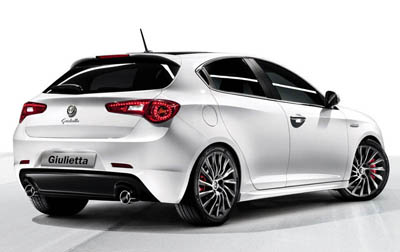
Alfa Romeo Giulietta, 2011


 Alfa Romeo Giulietta, 2011

The new Alfa Romeo Giulietta presented to the world at the 2010 Geneva Car Show. Sales of the new model start in spring and be gradually extended to all the major markets. The Alfa Romeo Giulietta is expected to give new impetus to the brand in one of Europe's most important segments.

In the Centenary year, the name is a tribute to an automobile myth and Alfa Romeo. The Giulietta is a car that, in the fifties, caught the imagination of generations of car enthusiasts, making the dream of owning an Alfa Romeo and enjoying the high level of comfort and technical excellence accessible for the first time.

The Alfa Romeo Style Centre has produced a new Alfa Romeo Giulietta, a sports car capable of expressing both great agility on the most demanding routes and providing comfort on everyday roads.

A new architecture for enhancing road hold and agility in total comfort and safety

Meet the new Alfa Romeo, a compact created to appeal to customers who seek top dynamic performance and those who are looking for a distinctive style and a high level of comfort.

The Alfa Romeo Giulietta has brand-new architecture, designed to meet the expectations of the most demanding customers in terms of road holding, agility and safety. Its excellent dynamic performance and great comfort are the result of refined technical solutions implemented in the suspensions, a next-generation steering system, a rigid yet light structure made of aluminium and high-strength steel, and state-of-the-art manufacturing technologies.
Alfa Romeo Giulietta

Alfa DNA, a device which customises behaviour of the car according to different driving styles and road conditions, can adapt the new Alfa Romeo to the needs of each individual driver to enhance driving pleasure and comfort. The new architecture of the Alfa Romeo Giulietta was designed to integrate and enhance all onboard systems. Three set-ups (Dynamic, Normal and All Weather) are available and can be selected using the Alfa DNA. This device - standard across the entire range of the new model - modifies the operating parameters of the engine, of the steering system, and of the Q2 electronic differential, in addition to fine-tuning the stability control system (VDC) behavioural logics.

Italian style sportiness and comfort

Combining sportiness and elegance, the Alfa Giulietta is the result of Alfa Romeo's new direction in style and technology - an approach that started with the Alfa Romeo 8C Competizione supercar and which recalls the brand's glorious past while projecting its traditional values of technology and emotion into the future.

The front end is developed around a "trilobe shape" and features a brand-new interpretation of the classic Alfa grille, set into the front bumper and suspended between the two air intakes. The entire car develops from here to combine a lively personality with an elegant form. The front headlamps implement LED technology and a Daytime Running Lights (DRL) function for maximum active safety.

The profile of the Alfa Romeo Giulietta is rich in personality and confers the appearance of an agile, solid model. This is above all the result of the coupé shaped side windows, which highlight dynamic and streamlined shape, and of the concealed rear handles. The side ribbing adds to the car's slender look, while the taut lines closing in on the rear end accentuate the "wedge" shape of the body.

The style of the rear end, like that of the front and the side, is strong and consolidates the impression of a muscular car, firmly gripped to the road. Like the headlamps, the rear light clusters implement LED technology, to the advantage of preventive safety, in addition to good looks.

The interior design is taut and light: a horizontally developed dashboard with aluminium element accents and rocker controls which explicitly recall the 8C Competizione. Painstaking attention to detail and the high quality of the materials used are the most advanced expression of Italian style.

Finally, the dimensions of the new car give a compact, dynamic shape combined with excellent roominess and a capacious boot (350 litres): the car is 4.35 metres long, 1.46 metre high and 1.80 metres wide with a wheelbase of 2.63 metres.

Innovative engines for exciting, environmentally friendly driving
The Alfa Romeo Giulietta guarantees top level performance and next-generation technology in terms of technical solutions, performance and environmental friendliness. Four Turbo engines will be available at launch, all Euro 5 compliant and fitted with a standard "Start&Stop" system for reducing consumption and emissions: two petrol engines (1.4TB - 120 HP and 1.4TB MultiAir - 170 HP) and two diesel engines (1.6 JTDM - 105 HP and 2.0 JTDM - 170 HP, both belonging to the second generation of JTDM engines). Finally, the range is completed with the lively 1750 TBi - 235 HP with an exclusive Quadrifoglio Verde configuration.

Safety and dynamic behaviour at the top of the segment
Alfa Romeo Giulietta was designed to obtain the maximum Euro NCAP rating in order to offer total protection to driver and passengers. Furthermore, suspension, steering and braking system are designed to be perfectly balanced even during extreme manoeuvres.

Finally, the Alfa Romeo Giulietta is fitted with the most sophisticated electronic devices for dynamic control as standard: VDC (Vehicle Dynamic Control), DST (Dynamic Steering Torque), Q2 electronic differential and Alfa DNA selector. All these systems guarantee driving safety, dynamism and performance in the best Alfa Romeo tradition.

Sunday, October 28, 2012

Alfa Romeo 4C Concept, 2011


  • Alfa Romeo 4C Concept, 2011

Alfa Romeo 4C Concept made its debut at the 81st Geneva International Motor Show. This compact "supercar" which represents the true essence of a sports car, according to the brand's values: performance, Italian style and technical excellence aimed at maximum driving pleasure in total safety.

The new concept presents the classic formula of the two-seater, rear-wheel drive coupé with its engine at the centre, a length of approximately 4 metres and a wheelbase of less than 2.4 metres: dimensions which serve both to emphasise the compact size of the car and to accentuate its agility. Distinguished by its graceful and clean external lines, the same principles are also applied to the inside, with the Concept's specific on-board design maintaining features and devices which directly reflect the car's sporting spirit.

On the Alfa Romeo 4C Concept technology and materials derived from the 8C Competizione find a home - carbon, aluminium, rear-wheel drive - and technology derived from Alfa Romeo models currently on sale: the 1750 turbo petrol engine with direct injection, the "Alfa TCT" twin dry clutch transmission and the Alfa DNA dynamic control selector.

Quite simply, this vehicle screams Alfa. Its sports car soul creates a unique driving sensation, both on the road and when racing, where its velocity and transverse acceleration become even more demanding.

Born from the experience acquired through the Alfa Romeo 8C Competizione and 8C Spider models, the new concept car shares its rear-wheel drive with the exclusive supercars as well as its philosophy based on achieving maximum driving pleasure and the proverbial Alfa Romeo road handling. This is an objective which the 8C Competizione and the 8C Spider pursue mainly through their increased power, while the Alfa Romeo 4C Concept follows the route of limited weight, made possible by extensive use of carbon, which also plays a structural role and guarantees exceptional agility with a weight/power ratio which is lower than 4 kg/HP. The chassis supports a body crafted completely from carbon, inside which there is space for the driver and passenger, while the rear frame structure and the crash boxes use aluminium extensively. The final result is a significant reduction in weight, limited to less than 850 kg, as well as the optimisation of the vehicle's centre of gravity, which gives the advantage of increased agility and drivability on the most challenging roads.

The name "4C Concept" is suggestive of the sports driving pleasure which only the spectacular "4 cylinder" 1750 Turbo Petrol engine which offers over 200 HP can bring. Already featured on a number of models in production, for example the Giulietta Quadrifoglio Verde, the engine boasts cutting-edge technical solutions such as direct injection, dual continuous variable valve timing, turbocharger and the revolutionary scavenging control system which eliminates turbo lag.

Located centrally in the rear of the vehicle, the engine in the Alfa Romeo 4C Concept ensures performance which matches or exceeds that of a 3 litre engine whilst still delivering the moderate fuel consumption which is typical of a compact, 4 cylinder engine. Coupled with the new automatic "Alfa TCT" twin dry clutch transmission, launched only a few months ago on the MiTo and which will soon be available on the Giulietta, the powerful 1750 Turbo petrol engine allows the Alfa Romeo 4C Concept to reach a top speed of over 250 km/h and to accelerate from 0 to 100km in under 5 seconds. The vehicle integrates its Alfa DNA technology perfectly, a true philosophy which brings together all of the on-board technology, making it enjoyable and customisable for the driver and further accentuating the "competitive" nature of the Concept compared to other vehicles currently on sale.

The Alfa Romeo 4C Concept has an extremely sophisticated suspension layout (high quadrilateral at the front, MacPherson at the rear) to ensure maximum agility and road handling. This solution, along with the rear-wheel drive and the extraordinary weight/power ratio, ensures Alfa Romeo driving pleasure, enhanced even further by the weight distribution (40% on the front axle and 60% on the rear axle). The Concept takes up the Brand's sporting tradition, taking us back to its origins, when agility and the weight/power ratio were the keys to a successful racing vehicle, and combining these aspects with the Alfa Romeos which take to the road every day.

The car is not simply an exercise in style created for the Motor Show; on sale in 2012 and is set to reinforce Alfa Romeo's global growth.

Thursday, November 3, 2011

Alfa Romeo MiTo Quadrifoglio Verde, 2010


Alfa Romeo MiTo Quadrifoglio Verde, 2010

The world premiere of the Alfa Romeo MiTo Quadrifoglio Verde with 170 hp 1.4 MultiAir TBi takes place at the 2009 Frankfurt Motor Show. The exclusive trim brings back a legendary symbol that over the years has appeared on some of Alfa Romeo's sportiest cars. Having always been synonymous with heritage, racing and victory, the "Quadrifoglio Verde" (four-leaf clover) now represents a new kind of sportiness that combines maximum driving pleasure with improved environmental qualities.

The Alfa Romeo MiTo Quadrifoglio Verde is the car with the most powerful 170 hp MultiAir engine and innovative solutions that accentuate the existing qualities of the model: hold, agility, active safety and driveability are heightened by an engine with one of the highest specific power values in the world and a chassis with features hitherto unthinkable for a car in this class.

The engine's best feature is its outstanding weight/power ratio, which has always been one of the key factors behind Alfa Romeo's success on the road and the racetrack. The class-leading ratio of 6.7 kg/hp is almost 10 per cent better than the already excellent performance of the current 155 hp 1.4 TBi. At 124 hp/litre, this engine is also one of the world leaders in specific power. In fact, this is the highest value ever recorded for an Alfa car, affirming the excellent engineering heritage of the Alfa Romeo MiTo.

This is a particularly important value because it proves the effectiveness of downsizing, aimed at producing high-tech engines to get better performance allied with sharp reductions in fuel consumption and emissions. Indeed, it is this latter area which provides the most surprising evidence of the technical level achieved: 4.8 l/100 km and 139 g/km of CO2 (in the extra-urban cycle) are closer to what you would expect from an economy car than a compact sports car that goes from 0 to 100 km/h in just over 7 seconds.

On the back of these exceptional power qualities and the unbeatable performance/consumption ratio, Alfa Romeo decided to give a sporty and technological feel to the Alfa Romeo MiTo Quadrifoglio Verde with high-quality finishes, attention to detail and a raft of features. One example is the 17" satin titanium-finished wheels (based on the Alfa Romeo 8C Competizione supercar). The same colour is used for the headlight frames and the wing mirrors, while the dark finish of the headlight parabolas is achieved by a brand new metal sublimation technology. The interior also has a refined sporty feel thanks to the all-black environment that ensures no reflections or distractions while driving. The technological aspect of this car is further enhanced by the sporty fabric used to upholster the seats, the modern dashboard and the white lighting on the instrument panel.

Dynamic Suspension
Competitive racing has always been a testing ground for new technologies, which have found their way from the world's most famous racetracks to standard road cars. One example of this passage between two seemingly very different worlds is dynamic suspension. This system, which actively and continuously controls the electronic shock absorbers, was developed by combining Alfa Romeo road testing with the latest engineering techniques from Magneti Marelli.

So, using experience gained on the racetrack, the system allows the Alfa Romeo MiTo Quadrifoglio Verde to excel even further in terms of agility and handling, giving it exceptional driveability and unparalleled safety. The driver gets three benefits from the Dynamic Suspension system: comfort, safety and agility. Above all, the electronic shock absorbers adapt to the road conditions and control all the car's movements. This guarantees maximum comfort and ensures that the unevenness of road surfaces is fully absorbed. In addition, the Dynamic Suspension system always ensures maximum grip and safety by actively responding to all road conditions. Finally, because roll and pitch are more restricted in all conditions, there is better stability and cornering that adds to the undoubted agility of the Alfa Romeo MiTo.

The suspension interacts perfectly with the three different control strategies of the Alfa DNA system. In "Normal", agility is combined with a higher level of comfort, whereas in "All Weather", the safety features are enhanced by continual interaction between the Vehicle Dynamic Control stability system, the steering and the suspension. Finally, in "Dynamic", the MiTo becomes a true sports car clinging to the ground and fit for any road: it is no coincidence that the system was developed at the historic Balocco test track and round the corners of the Nurburgring. So, thanks to the hard work of Alfa Romeo and Magneti Marelli, the car is responsive and reliable when you turn the steering wheel or put your foot on the accelerator.

The innovative Dynamic Suspension system is made up of four electronically controlled shock absorbers, five accelerometric sensors, a control unit and an interface with Alfa DNA for the different settings and with the other on-board electronic systems.

Its main feature is to actively and continuously control the response of the shock absorbers, which adapt depending on the movement of the car and the road conditions, as well as the driving style. To sum up, the Dynamic Suspension system better protects passengers from uneven road surfaces thanks to an effective filtering and optimises comfort by recognising an obstacle (such as a bump or a hole) and adapting suspension behaviour accordingly. The system also ensures better cornering by altering damping distribution of the four shock absorbers, enhancing handling and hold thanks to advanced lateral dynamic control. What's more, the Dynamic Suspension system manages longitudinal dynamic control by adjusting the movement of the chassis during acceleration, braking and gear changes, and by integrating perfectly with the Vehicle Dynamic Control, steering and braking systems.

The new six-speed C635 gearbox
The technological qualities of the Alfa Romeo MiTo Quadrifoglio Verde are further enhanced by the next-generation C635 gearbox. Developed by FPT and manufactured at the Verrone factory in Italy, this groundbreaking mechanical unit is the first result of a design philosophy aimed at improving driveability, consumption levels and production flexibility.
 
The new gearbox ensures clean and swift changes with very short selection movements, uniform activation pressures, no noise and no vibrations. In addition, modern design and construction techniques help to significantly reduce consumption levels thanks to less friction and the best possible gear ratios.
Related Posts Plugin for WordPress, Blogger...